
Every month, the ICC picks three standout performers for its Player of the Month award, and July’s shortlist is one of the toughest yet. Two nominees earned their spot through dominant bilateral series, while the third made her case on the biggest stage in the sport: the ICC Women’s T20 World Cup.
The three names on the list are Hayley Matthews of the West Indies, Harshitha Samarawickrama of Sri Lanka, and England’s Nat Sciver-Brunt. Each of them stepped up at a different moment in July, and as a result, choosing just one winner won’t be simple for the voters.
Before diving into the details, here’s a quick snapshot of what each player brought to the table.
Quick Comparison of the Nominees
| Player | Country | Format | Standout Stats |
|---|---|---|---|
| Hayley Matthews | West Indies | ODI series vs Ireland | 265 runs, 7 wickets in 3 games |
| Harshitha Samarawickrama | Sri Lanka | ODI series vs Pakistan | 173 runs, Player of the Series |
| Nat Sciver-Brunt | England | ICC Women’s T20 World Cup 2026 | 133 runs, Player of the Match (semi-final) |
Now, let’s break down exactly what each of these players achieved and why they made the cut.
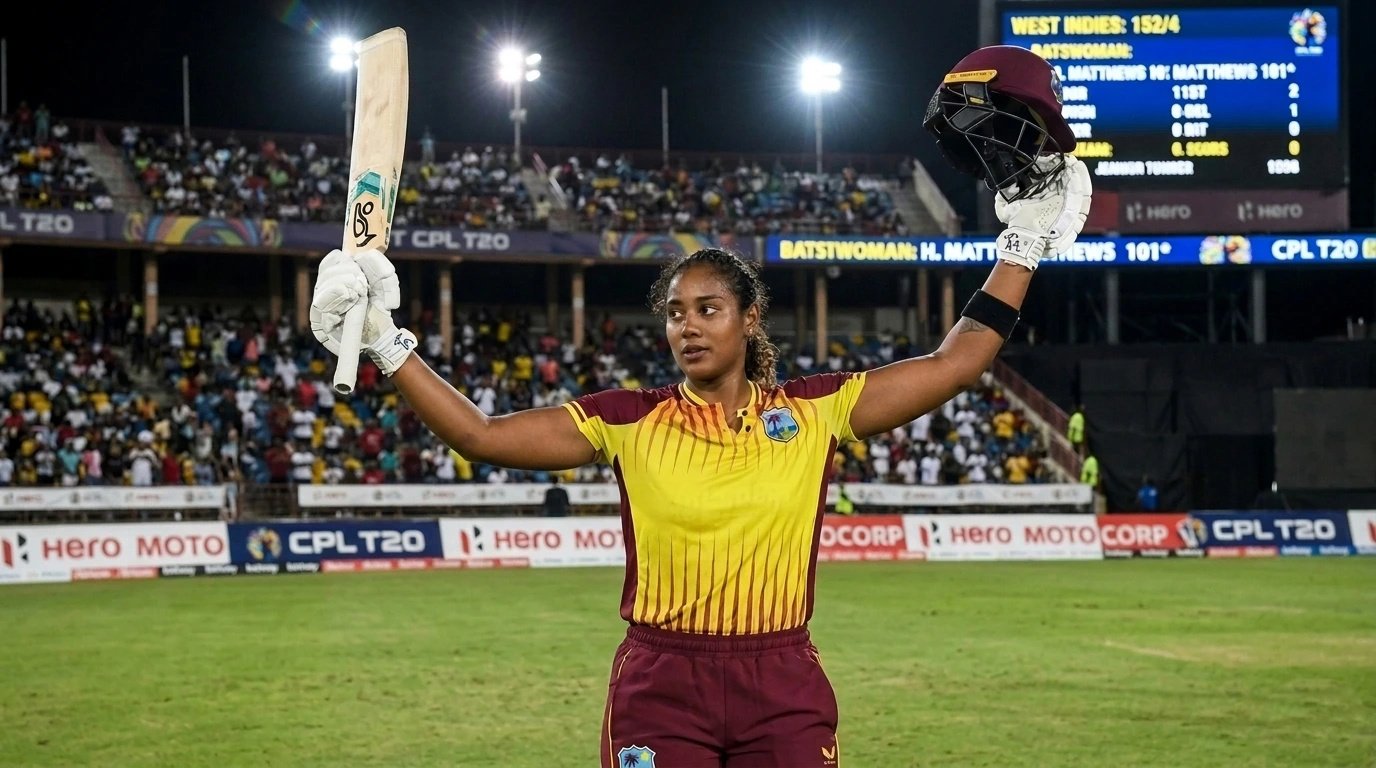
Hayley Matthews: The All-Round Powerhouse
Matthews had, without question, the most complete month of any nominee. Facing Ireland in a three-match ODI series, she didn’t just score runs — she controlled entire games with both bat and ball.
In the opening match, she picked up figures of 3/52 before walking out to bat. From there, she produced a career-best, unbeaten 159 to seal the chase almost single-handedly. That kind of double impact is rare, and it set the tone for the rest of the series.
She followed that up with another century in the second ODI, this time scoring exactly 100 runs. On top of that, she added 2/34 with the ball, proving the first game was no fluke. Although her batting return dipped in the third match, she still contributed 2/37, keeping the West Indies competitive throughout.
By the end of the series, Matthews had racked up 265 runs at an average of 132.50, striking at 117.25. Meanwhile, her seven wickets came at an economical average of 17.57. Few players manage this level of impact with both bat and ball in the same series.
Harshitha Samarawickrama: Composure Under Pressure
Samarawickrama’s series against Pakistan didn’t begin the way she’d have hoped. She scored just two runs in the opening ODI, and the pressure was clearly building. However, instead of letting that result linger, she answered back in the second match with a well-built 100 off 119 balls.
That innings dragged Sri Lanka right back into contention. Following this, she saved her best performance for the decider. Chasing 187 to win the series, Samarawickrama stayed unbeaten on 71 and guided her team home in style.
This kind of composure under pressure earned her the Player of the Series award, in addition to her nomination here. Across all three matches, she finished with 173 runs at a staggering average of 173. Given the situation she faced early on, that turnaround stands out even more.
Nat Sciver-Brunt: Leadership Through Adversity
Unlike her fellow nominees, Sciver-Brunt’s case rests on a single tournament rather than a bilateral series. Still, it happens to be the largest event in women’s cricket right now — the ICC Women’s T20 World Cup 2026, hosted on home soil in England. What makes her performance even more impressive is that she pushed through the knockout stages while carrying a calf injury.
Her defining moment came in the semi-final against South Africa. Early on, England collapsed to 23/3 within the first four overs, and the innings looked shaky at best. Despite this rocky start, Sciver-Brunt steadied things with a match-winning 75. She then built a crucial 133-run partnership with Heather Knight, pushing England toward a total strong enough to reach the final.
Her work wasn’t finished there, either. In the final itself, against Australia at Lord’s, she top-scored for England with 58 off 53 balls. As team captain, she led from the front when it mattered most. By the tournament’s end, she had piled up 133 runs at a strike rate of 133 — a fitting reflection of her role throughout the ICC Women’s T20 World Cup.
So, Who Wins the Award?
There’s no obvious favorite in this group, and that’s exactly what makes July’s shortlist so compelling. Matthews brings the strongest statistical case, thanks to genuine all-round contributions with both bat and ball. Samarawickrama, on the other hand, built her case through composure in a pressure-packed decider.
Sciver-Brunt’s nomination carries a different kind of weight altogether. She performed on the sport’s biggest stage while injured, and she did it as her team’s captain. Ultimately, the final decision comes down to ICC’s official voting process, which typically blends fan votes with input from a selection panel.
Final Word
July 2026 turned out to be a month where individual brilliance shaped outcomes across formats. Whether it’s Matthews’ all-round dominance, Samarawickrama’s clutch batting, or Sciver-Brunt’s leadership at the ICC Women’s T20 World Cup, all three nominees show exactly why women’s cricket keeps growing its audience every year.
For more cricket breakdowns, player stats, and the latest sports coverage, check out mygamerankgamesguides.com
Leave a Reply